
Everest Base Camp Trek
Comprehensive Trip Overview
Trip Facts
Now you can experience one of the most memorable treks at the Everest Base Camp in 14 days with an unparalleled adventure and fun. You will also have the chance to fly over one of the most varied mountain landscapes interwoven with Buddhism and Sherpa culture, as well as to experience the world’s highest peak in its pristine natural beauty.
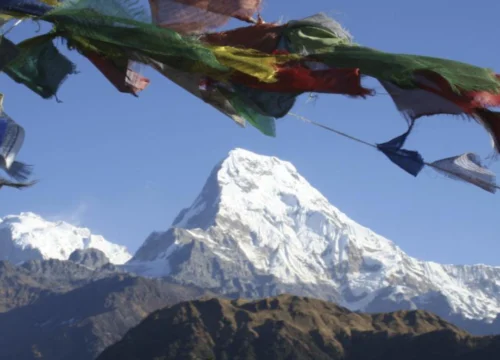
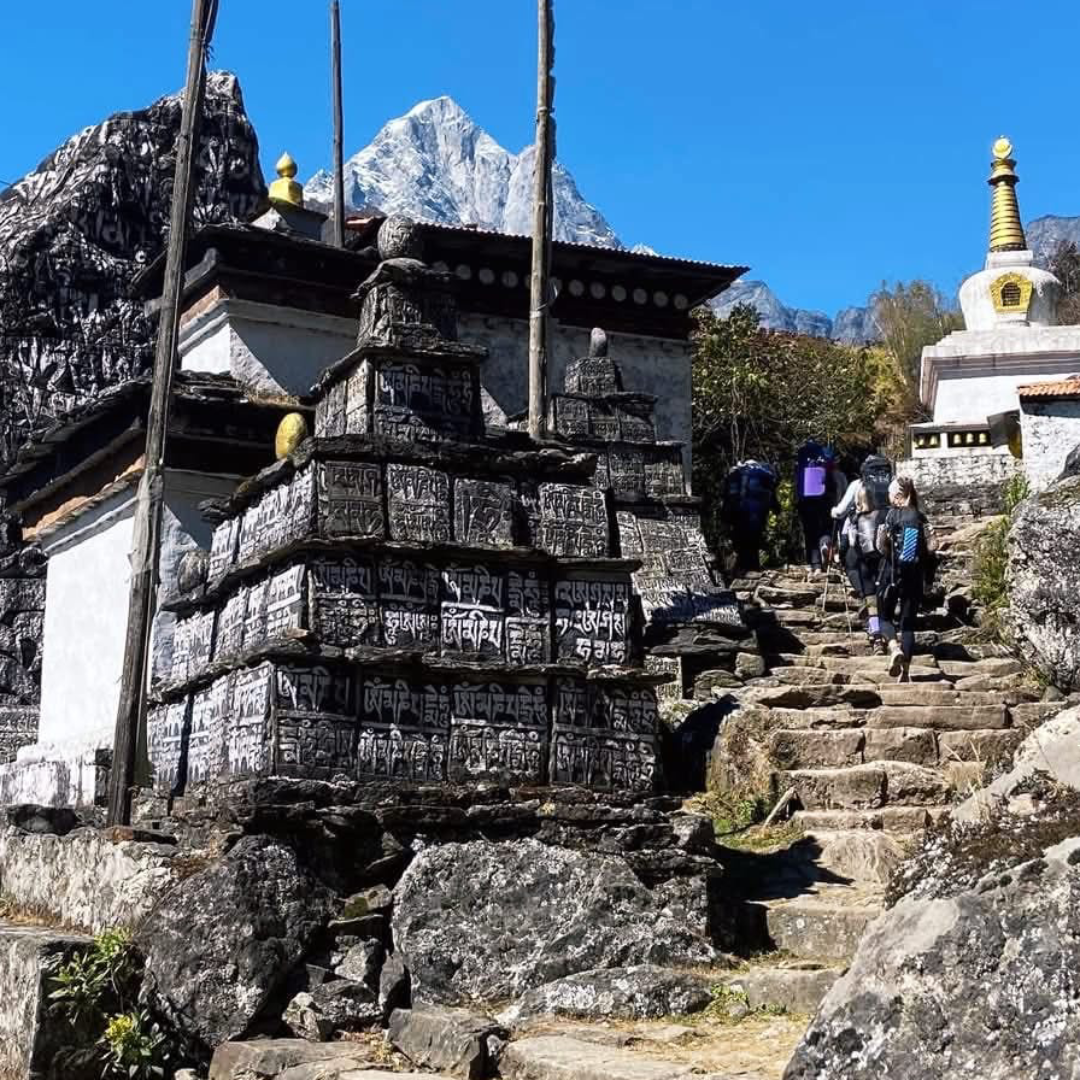
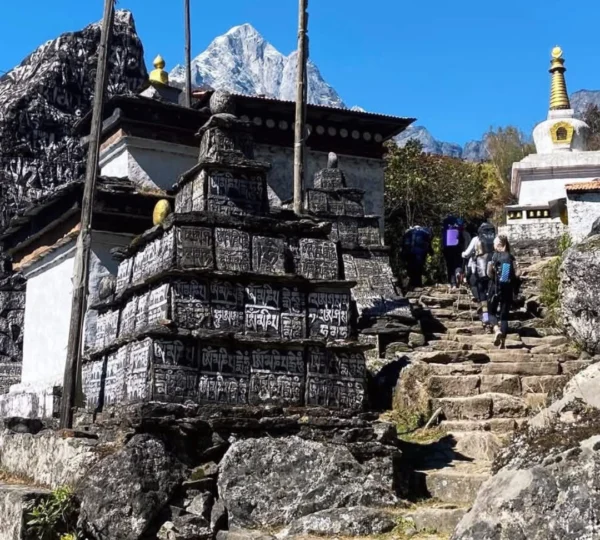
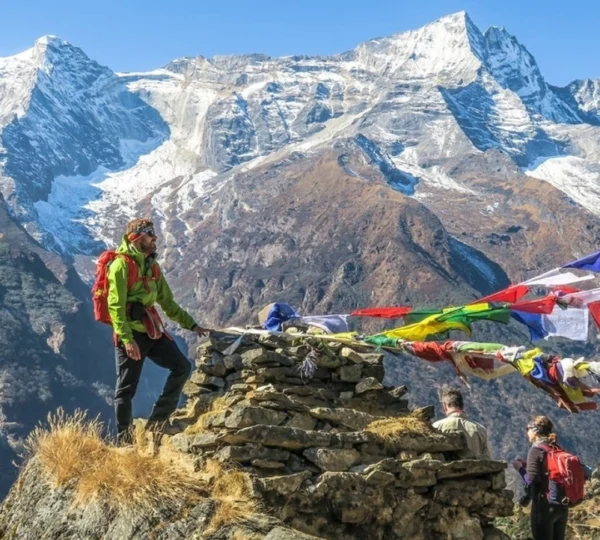
The journey starts with an exhilarating and beautiful flight to Lukla (Tenzing-Hillary Airport, 2860 m) one of the most interesting airports in the world. From this point the trail passes through the heart of the Khumbu region passing through mani walls and prayer flags, swinging suspension bridges, rhododendron forests, yak pastures, and up ever higher toward the Roof of the World.
Short Day to Day Itenary:
| Day 1 | Arrival in Kathmandu |
| Day 2 | Flight from Kathmandu to Lukla & trek to Phakding |
| Day 3 | Phakding to Namcha Bazar |
| Day 4 | Rest day in Namche Bazaar |
| Day 5 | Namche Bazaar to Tengboche |
| Day 6 | Tengboche to Dingboche |
| Day 7 | Rest Day in Dingboche |
| Day 8 | Dingboche to Lobuche |
| Day 9 | Lobuche to Gorak Sherap and to Everest Base Camp |
| Day 10 | KalaPathaar to Pheriche |
| Day 11 | Pheriche to Namche Bazaar |
| Day 12 | Trek from Namche to Lukla |
| Day 13 | Flight from Lukla to Kathmandu |
| Day 14 | Departure from Kathmandu |
Why is this Trek the one to do?
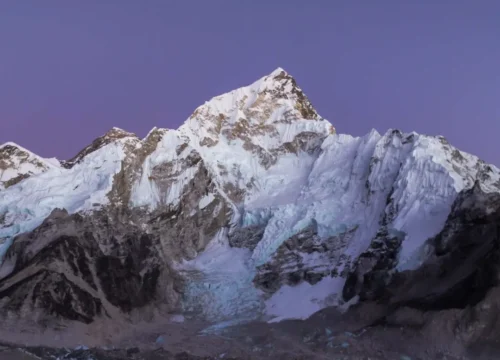
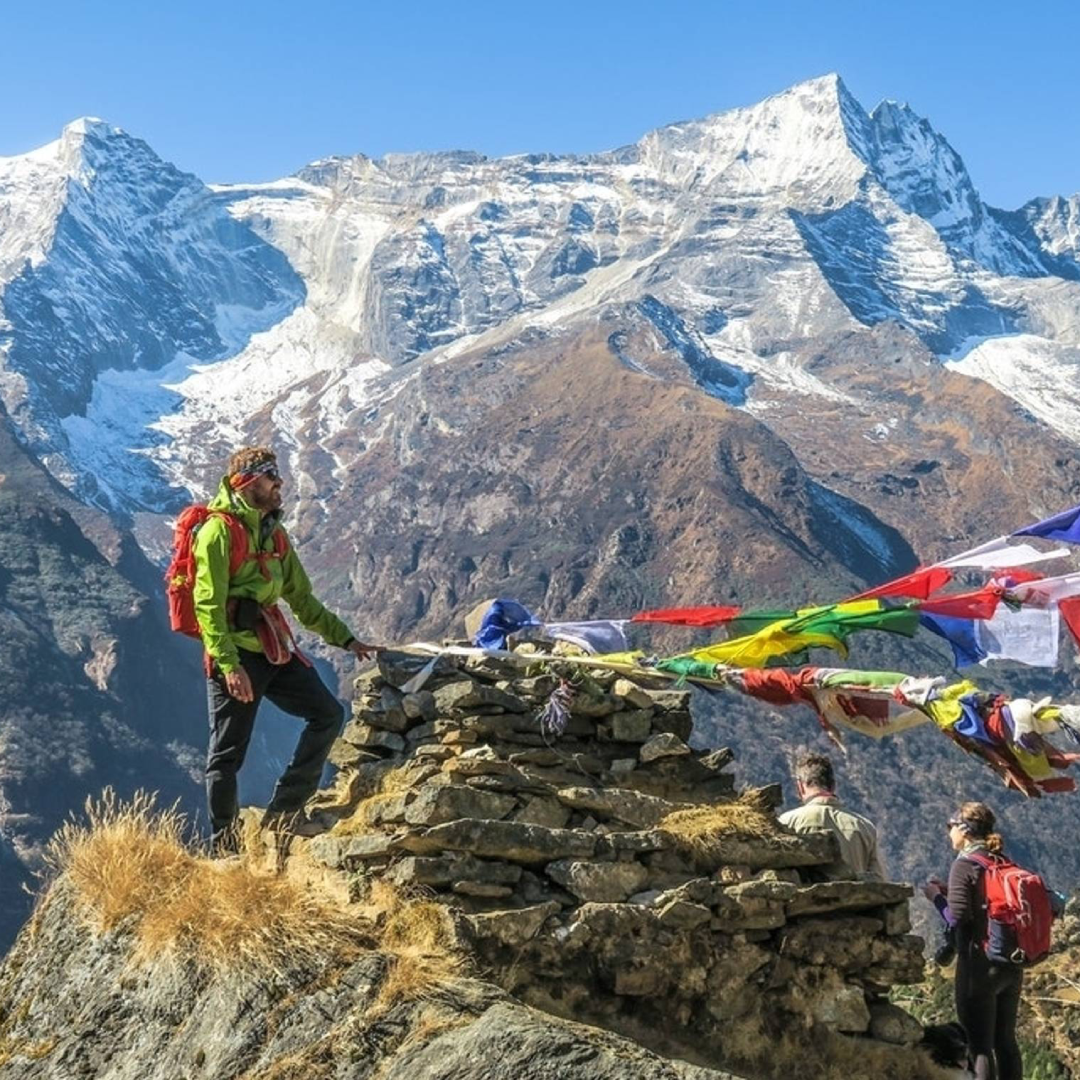
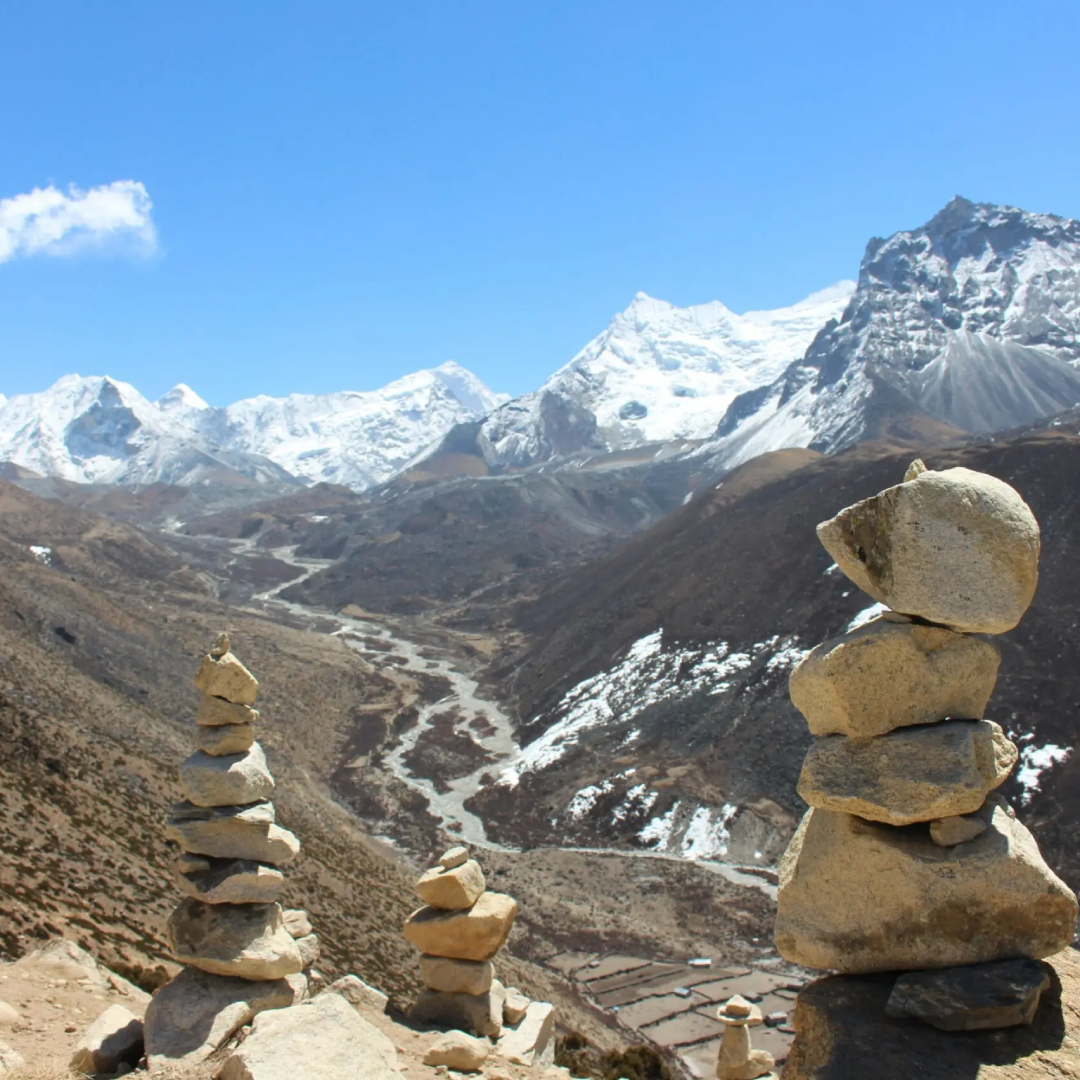
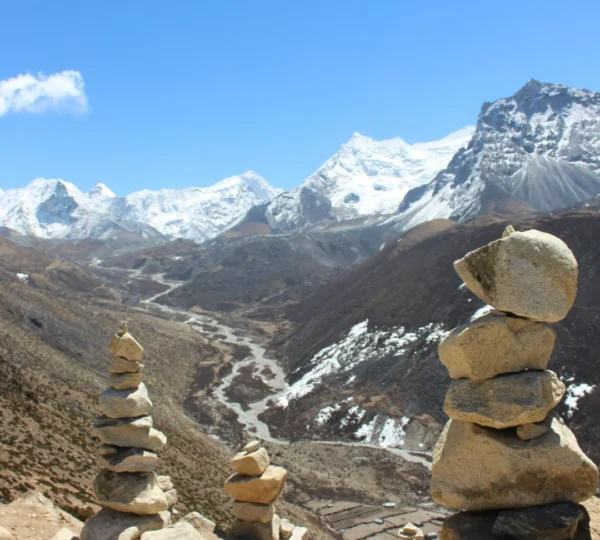
The highest point on the earth is at 8,848.86 metres on Mount Everest which is known as Sagarmatha in Nepali and Qomolangma in Tibetan. But there are many more giant mountains that surround you in addition to Everest: Ama Dablam, Lhotse, Nuptse, Thamserku, Kongde Ri, Pumori, Khumbutse, Lingtren and others. The views of mountains against the blue sky throughout the trip make it a memorable and beautiful journey.
Namche Bazaar is the cultural hub of this trek. You can taste the real food from the Sherpa (Thenduk, Thukpa, Sherpa stew and momos), visit the Sherpa Culture Museum and see the mountain people doing their amazing daily lives. Tengboche is the home of the oldest and largest Buddhist monastery in Khumbu Dawa Choling Gompa which is next to Ama Dablam and has an awe-inspiring view of Everest.
The final big push up to Kala Patthar (5,545m) is the highlight of the trek with the 360-degree view from the top spanning the entire shape of Everest, Lhotse, Nuptse, Ama Dablam, Pumori and Khumbutse in all its glory truly jaw-dropping and one of the best photographed views on earth!
Trek Cost – 2026 & 2027
Thus the price of the Everest Base camp trek for 14 days is group size dependent. The following prices are effective in the peak season (Spring – March to May, Autumn – September to November). In the low season (January to February, and June to August) please call our team for a discounted rate.
Fitness, Safety & Acclimatization
Is This Trek Difficult?
Though no previous trekking experience is required, it is a moderately tough trek with a maximum elevation of over 5,500 metres. Your daily walking will last 5-7 hours and traverse side valleys as well as high altitudes and terrain. To be successful one must be physically fit and mentally prepared.
Altitude and Acclimatization
There is a big altitude gain from the lowest point at Phakding (2,610 m) to the highest point at Kala Patthar (5,545 m). Acute Mountain Sickness (AMS) can occur due to rapid rises in elevation. Two days of acclimatization are planned (at Namche Bazaar and Dingboche), which are designed to help your body acclimatize properly. We use the ‘climb high, sleep low’ policy, daily pulse oximetry and will take conservative decisions to keep you safe and comfortable.
The essential altitude tips: breathe in a steady way, ‘walk-talk’, drink 3-4 litres of fluid a day, eat regularly (dal bhat is your best friend) and always listen to your body and your guide.
A Simple 6-Week Preparation Plan
You do not need prior trekking experience, but you should prepare both body and mind. Here is a straightforward plan:
| Weeks 1–2 |
|
| Weeks 3–4 |
|
| Weeks 5–6 |
|
Best Season to Trek
You can trek to Everest Base Camp at any time of year, but different seasons offer different advantages:
| Spring: March–May |
⭐️ Best overall season. Moderate temperatures, clear views, and rhododendrons in full bloom. Peak season trails are busy. Lukla flights may operate via Manthali/Ramechhap. |
| Autumn: Sept-Nov |
⭐️ Best overall season. Crisp air, crystal-clear mountain views, stable weather. Another peak season book early. Lukla flights may also route via Manthali. |
| Winter: Dec–Feb |
Quiet trails, stunning clarity, unmatched solitude. Cold nights (gear up well). Direct KTM–Lukla flights. Ideal for confident trekkers who want a peaceful experience. |
| Monsoon: June–Aug |
Lush greenery, quiet trails, fewer crowds. Rain brings leeches, possible landslides, and occasional flight delays. Best for flexible travellers who love dramatic green landscapes. |
The following is a list of common issues encountered in flights to and from Lukla:
It is one of the world’s most dramatic airports, Lukla’s Tenzing-Hillary Airport is located at 2,860 m. Here’s what you should know:
- In summer and winter (spring and autumn), flights are frequently diverted from Tribhuvan International Airport (KTM) to Manthali Airport (Ramechhap), which is approximately 4 hours drive from Kathmandu, to reduce the congestion at Tribhuvan international airport. Transfers leave as early as 2 am.
- Generally, flights fly direct from Kathmandu to Lukla throughout winter and summer (for 30-40 minutes).
- In the face of unpredictable mountain weather, there is always a possibility of flight delays or cancellations. Schedule buffer logic and contingency plans are built into the schedule. As a rule, we suggest you arrive in Kathmandu 1 day early and if possible have a day at the end.
- Routine on the Everest Trail
Teahouses
Simple, warm and authentic family-run lodges. It is a Swiss alpine hut, only with dal bhat and yak dung stoves. Rooms are twin share and bathrooms are private (lower trail) or shared (higher up). At higher elevations it’s a more basic experience.
Food & Water
Three meals, or so, each day, dal bhat, soups, noodles, momos, pancakes, omelettes and the much-loved apple pie in Namche. We will help you make the best food selection when at height. Above Namche, we generally recommend vegetarian food as supply chains can be long. Refill or purify with refills (included) for water or purchase bottled water. Drink between 3-4 litres of water per day at altitude.
Wi-Fi, Electricity & Mobile
Beyond there solar panels are available, and hydropower (Thame-Namche plant opened in 1995) is available up to Namche. The charge rate is USD 3-5 per device per charge. Wi-Fi cards are available to use (USD 5-10 per session) with Everest Wi-Fi. Cell phone reception is available up to Dingboche and is patchy to the highest elevations. Bring power banks!
Money on the Trail
You can use ATMs and cards in Kathmandu. Namche can be equipped with ATMs, though they may not be always reliable. In Nepalese Rupees (NPR) cash at the top of Namche for personal items including Wi-Fi, hot showers, snacks and charging. Allow USD 20–30 per day for individual expenses (NPR). Take advantage of better exchange rates in Kathmandu.
Who Can Trek to Everest Base Camp?
Families with Kids
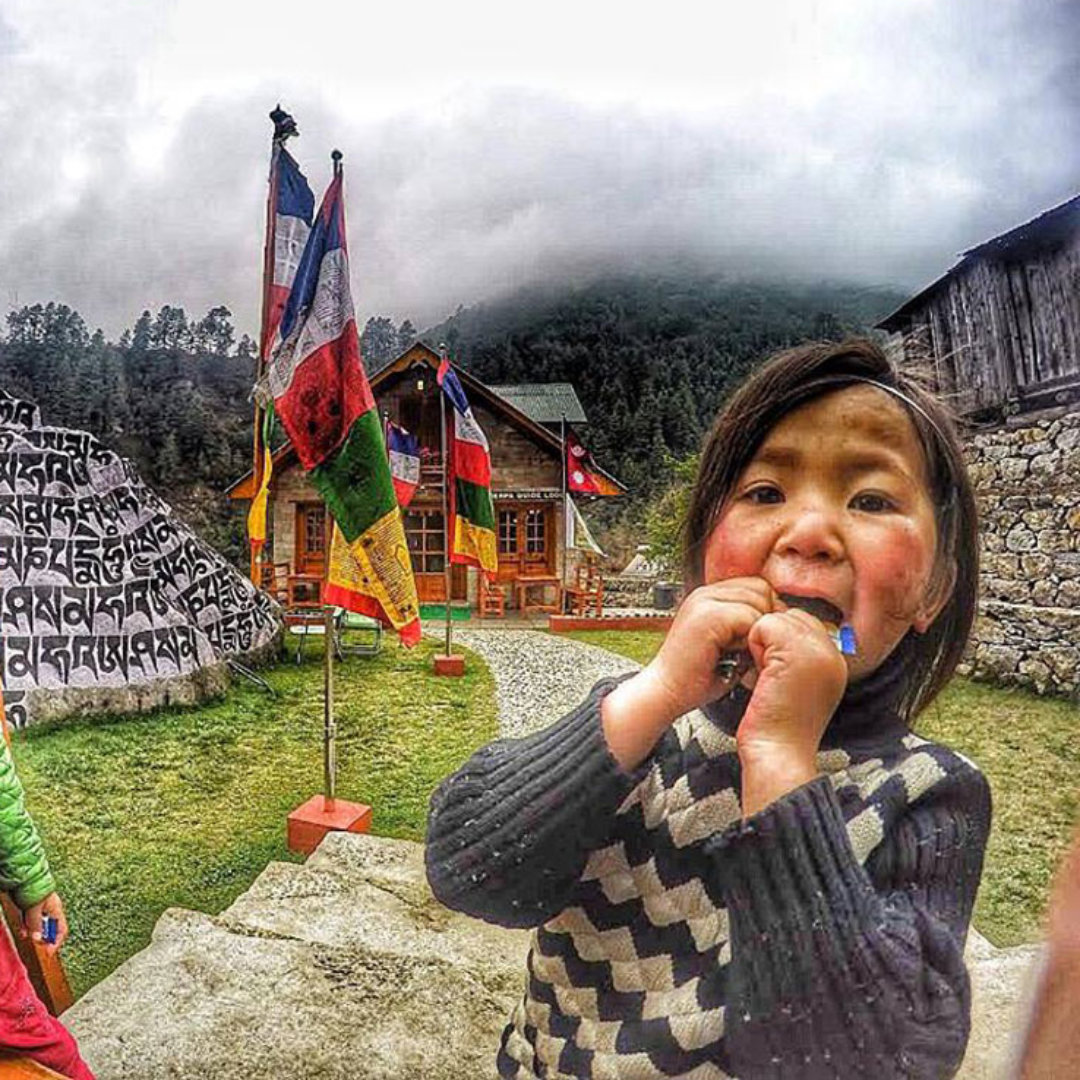
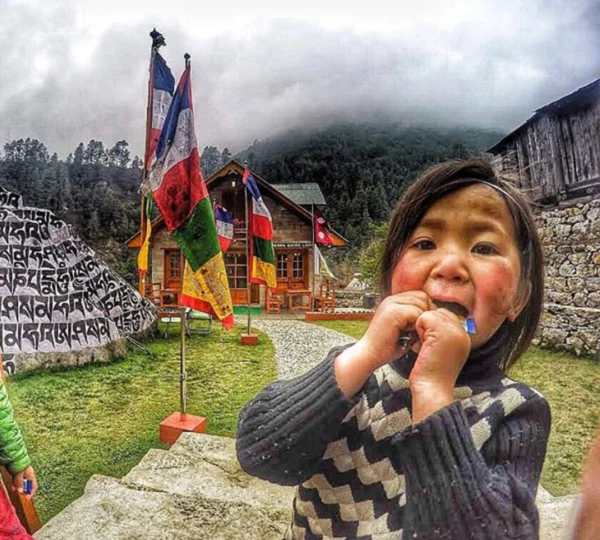
This trek was done by children as young as 6 years. Children bring the theme park to the crossings, and the prayer flags become questions of the universe. We pace our activities, select family-friendly spaces and ensure that this adventure is fun and memorable for everyone.
Seniors & “Birthday Goals”
For people in their 60s and 70s, Happy Tour Nepal will give you the opportunity to trek to Base Camp every year. If you are prepared to acclimatize, pace yourself and use a porter for comfort, not only is it possible — it is one of the best emotional and satisfying experiences of a lifetime!
Solo Travellers & Couples
Private tours provide you with the attention of your guide, allow you to stop at sacred sites and offer an intimate experience. Couples book for one of the honeymoons, anniversaries or milestone promises fulfilled. Female guides can be hired on demand for female hikers.
Corporate & Leadership Groups
Teams of 6 to 12 individuals embark on this 12-day journey as a powerful retreat – a collective objective, sincere effort and a destination at 5,364 m. For mixed ability groups we pace and we can arrange a helicopter return to suit flights times.
The recommended age range is 12 to 65+ and good fitness. If you’ve never hiked long trips or have not trekked with kids under 12, this 14-16 day trip is a more relaxed pace. For seniors (age 60 and above), the doctor should take the following: recent check-up results, and keep blood pressure well controlled.
Safety, Support & Peace of Mind
- Knows how to use first-aid; has high-altitude awareness; is a licensed guide
- Porters who are limited to reasonable loads (usually 18-25 kg per person).
- Daily health assessments – including pulse oximetry
- The medical posts in major villages: Lukla, Namche, Pheriche, Dingboche
- HRA clinic in Pheriche (seasonal)
- Helicopter evacuation possible in emergencies (must be covered by your travel insurance)
- Your Guide and Happy Tour Nepal staff closely interact with each other throughout the tour.
- First aid box used during the trek and used compressively
Essential Packing List
Clothing & Footwear
- Warren boots with good ankle support (previously broken in before trip)
- Warm and moisture-wicking socks (4-6 pairs)
- For the bottom, wear a thermal underwear, and for the top, wear a thermal shirt.
- Mid-layer and insulated down jacket (can be provided)
- Waterproof/windproof shell jacket and trousers
- Trekking trousers (2 pairs)
- A warm cap, buff/neck gaiter, sun hat.
- Liners will be worn under gloves, which will be insulated with warm gloves.
Gear & Equipment
- You will need to bring trekking poles (we can supply).
- Daypack (20-25L) and rain cover:
- Duffel bag (we provide if using a porter)
- Warm sleeping bag suitable for cold temperatures (we can provide)
- Sunglasses with UV protection, sunscreen SPF 50+, lip balm
- Headlamp, extra batteries and power bank(s)
- The cable for the notebook computer, laptop or cell phone and camera is included.
- Health & Personal Items
- Personal medicines, blister kit, ORS sachets, ibuprofen, Diamox/acetazolamide (if prescribed to take for altitude)
- Hand sanitiser, quick-dry towel, personal toiletries
- Water bottle/hydration bladder (2L capacity is suggested)
- Zip-lock bags for dust protection; small NPR notes for extras
Pro Tips
Carry light on your porter: 18–20 kg, carry your day pack on the trail. Take snacks that you enjoy (e.g. jerky, bar, energy bars) since there is less food variety at altitude. Store travel insurance documents and emergency contacts in a waterproof sleeve. Put in your daypack, NOT your duffel, crucial papers and passport.
Travel Insurance
Travel insurance is required for this trek. Helicopter evacuation to at least 6,000m must be covered by your policy. This is a non-negotiable: costs in the event of an emergency evacuation can be very pricey without insurance. Leave a copy of your policy with your guide and share your insurer’s emergency contact number with your guide before you leave.
Payment Options & Booking Procedure
Payment Methods
- Wire Transfer, PayPal, Debit/Credit Card and Cash are accepted.
Booking Procedure
- Payments are accepted as a confirmation of booking.
- The booking will be confirmed with a 30% deposit.
- Trips can be scheduled or postponed at any time, notifying the relevant authority.
- Please let us know at least one month before if you have any problem.
- 50% of the total amount will be refunded if you cancel 15 days or more before departure.
- Guest who are not on the arrival date, but without previous notice will not be able to get a refund.
Why Choose Happy Tour Nepal?
Happy Tour Nepal is a locally operated trekking company committed to delivering safe, responsible, and memorable Himalayan adventures. Our experienced guides, strong safety standards, and personalised service ensure that every trekker enjoys a comfortable and rewarding journey.
- Tailored Luxury
Your journey, your way. Our expert planners curate personalised itineraries to cater to your preferences, ensuring an experience as unique as you are.
- Unmatched Comfort
Immerse yourself in the finest available accommodations and impeccable service throughout your expedition.
- Expert Local Guidance
Our local guides are your companions to the heart of Nepal. Their insights, stories, and decades of trail knowledge enrich your adventure, creating memories beyond the ordinary.
- Guaranteed Departure
We guarantee departure for trekking every single time. There will be no delay or change to the departure date as we respect our guests’ time and schedule. Every effort will be made to honour your trip, the only exception being extreme unforeseen weather or safety-related disruptions (e.g. flight cancellations due to heavy cloud or fog).
- Minimum Group Size
We are exclusive and do not wait to fill a group of 10 or 12. If there are just two members, we are ready to go. Private departures are available for solo trekkers too.
- Flexible Instalment Payment
We allow our valued guests to book future trips with flexible monthly instalment payments. Plan ahead and secure your adventure with ease and peace of mind.
Frequently Asked Questions
Q1. Do I need to apply for a visa at the airport in Nepal?
Yes. Visas can be obtained for citizens of the USA, UK, EU, Australia, Canada and most other countries on arrival at Kathmandu’s Tribhuvan International Airport. The visa is for 30 days and the application takes between 20-30 minutes, and the cost is $50. Carry passport photographs and money or a credit card.
Q2. How many kilometres is the 14-day EBC trek?
Round trip from Lukla to Lukla is about 130 km (80 miles) based on topography and altitude at an average rate of 8 to 15 km/day.
Q3. Is it necessary to have prior trekking experience?
2. No, just basic fitness and determination are enough. If you’re able to do a 5-7 hour walk with a light pack at home you’re ready to prepare. With our pacing and acclimatization days, first timers have been successful trekking every season.
Q4. What is the greatest elevation in this hike?
Kala Patthar is the highest panoramic point of view from where you can see the Everest, Lhotse, Nuptse, Pumori and other peaks at sunrise, at a height of 5545m.
Q5. Is a licensed guide required?
Yes. Trekking without any licensed guide is only permitted in some parts of Nepal since 2023, including in the Khumbu region. Local guide ensures safety, logistics, permit management, and cultural depth.
Q6. Are porters included?
Available and recommended porters. The typical load is up to 18-20kg per porter (shared between two trekkers). Lighter weight trekking equals more enjoyment!
Q7. Are meals included?
Yes. Eating 3 times a day; basic, substantial and high-altitude meals. We advise you on the foods that will support a good night’s sleep and recovery at altitude.
Q8. May I use rivers or taps to drink from?
Fill with purification tablets (provided) or purchase bottled water. Try to drink 3-4 litres of water each day. Staying hydrated is one of the most important altitude performance factors.
Q9. So, what about hot showers and charging?
These are both found at most teahouses for USD 3–10 per shower or charge. Availability of solar/hydropower varies from village to village. Carry extra batteries for emergencies.
Q10. Is Wi-Fi available on the trail?
Yes. Get Everest Link Wi-Fi cards for USD 5-10 per session. Bandwidth is good up to and at Namche and Dingboche but less above.
Q11. What permits must be obtained?
The total cost of the three is an estimated USD 70, which includes a TIMS Card, a Sagarmatha National Park Permit and a Pasang Lhamu Municipality Permit. All of the permits are included in our Package price and organized by Happy Tour Nepal.
Q12. The best time of the year for trekking?
The best weather and views of the mountains are in the spring (March-May) or in the autumn (September-November). Winter is a season of solitude and clarity. Monsoon is a place of abundant greenery and flexible plans.
Q13. If my flight to Lukla is delayed or cancelled what do I do?
Mountain weather can cause delays it’s part of the adventure. Peak season schedules have contingencies built in buffer time and can be booked for helicopter seats, if required (weather permitting, additional cost). A buffer day is recommended at the start and finish of your trip.
Q14. Do children and senior citizens have to travel in safety?
Yes. We’ve taken kids as young as 6 and older trekkers to Base Camp. With the correct pacing, acclimatization and porter assistance it’s possible and incredibly fulfilling for all ages!
Q15. Is it possible to tailor the programme?
Absolutely. Private pacing, additional acclimatization nights, Helicopter return from Gorak Shep and Village stay packages this is a structure you can mold with us. Call us up today to plan your perfect hike.
Q16. What are the cultural highlights to be enjoyed?
The Hillary School in Khumjung (1961), the Sherpa Culture Museum in Namche (1995), the Hillary School in Khumjung is built in 1961 and the Yeti skull is visible at Khumjung Monastery, vibrant teahouse life throughout, and the Tengboche Monastery was established in 1916. The Mani Rimdu festival (dates vary) is held in autumn.
Q17. Is there any place to store luggage in Kathmandu?
Yes. The luggage is stored for free at Happy Tour Nepal. Pack only necessary items for the hike and drop off extra bags and city attire with us.
Q18. What is a common item that you tend to forget when packing?
Power banks, lip balm, duct tape (for emergencies on the footpaths), a few handy NPR notes for adding to trails, a few favourite snacks and perhaps patience for weather windows.
Ready to Trek? Book Your Adventure
Flights fill, rooms fill and seasons move on every month that passes. While you’re still waiting to figure out where your next date will be, they’ve already booked, trekked, and completed a date because they decided to put one on the calendar.
It is never too late to visit Paris “the other year.” Everest can only be seen from Kala Patthar during the early morning hours and only by those who are present in the area.